
If you have ever stood in a grocery store or looking through an online shop wondering whether to pick up “Khairpur Aseel Dates” or just want the regular ones sitting right next to them — you are not alone. Many people assume a date is just a date. They look similar, they taste somewhat sweet, and they both come from palm trees. So why does one cost noticeably more than the other?
The answer, once you understand it, changes the way you think about dates forever.
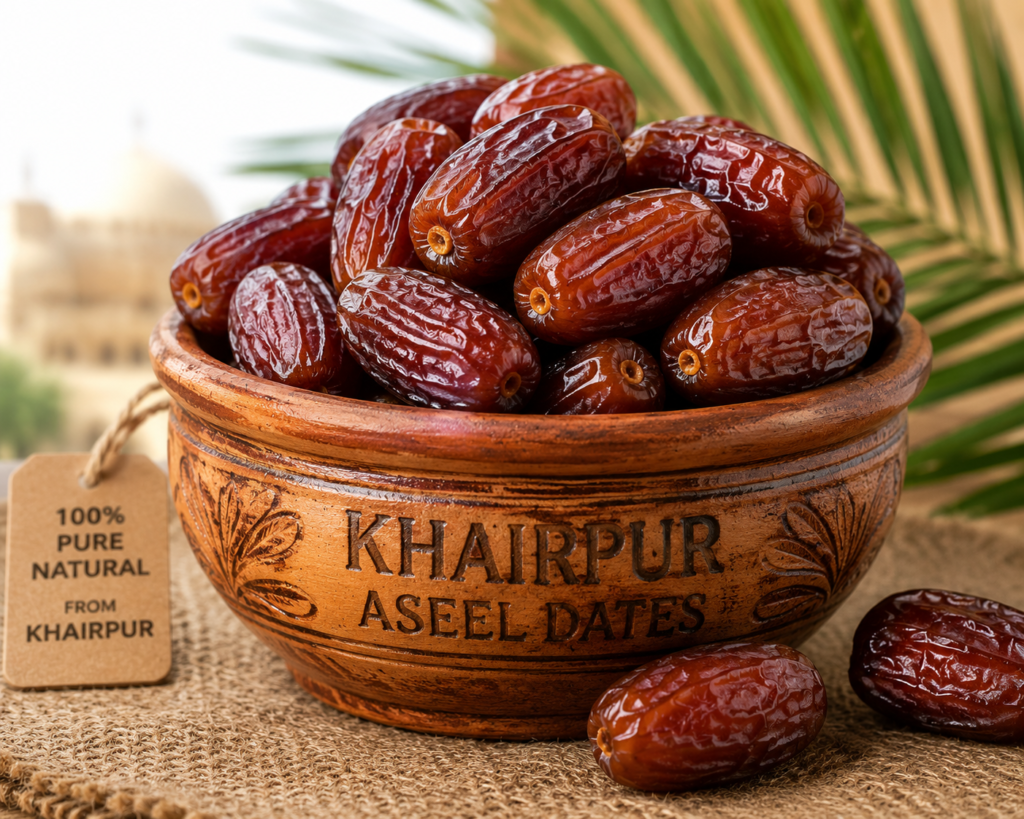
Let’s break it down properly — no fluff, just the real difference between Khairpur Aseel Dates and the regular dates you typically find in markets across Pakistan.
Read More: Healthy Snacks for Diabetic People
First, What Are Khairpur Aseel Dates?
Khairpur is a city in Sindh, Pakistan, and it sits in one of the most ideal date-growing regions in the entire world. The climate there — dry, hot summers and mild winters — creates the perfect conditions for date palms to flourish. The soil composition along the Indus River basin adds minerals to the fruit that simply cannot be replicated elsewhere.
Read Also: Best Natural Oils for Hair Growth
The word “Aseel” itself means “pure” or “of noble origin” in Urdu and Arabic. It is not just a marketing label. Aseel is a specific variety of date that has been cultivated in Khairpur for generations. Local farmers have refined their techniques over decades, harvesting these dates at exactly the right stage of ripeness by hand.
These are not mass-produced dates. They are a regional specialty, much like how Basmati rice from certain parts of Punjab carries a different quality and aroma than generic long-grain rice.
What Are “Regular Dates”?
When we say “regular dates,” we are referring to the more commonly available varieties you find in general grocery stores or bulk markets. These might include:
- Deglet Noor (imported, often from Tunisia or Algeria)
- Medjool (popular globally, grown in multiple countries)
- Zahidi (drier, lighter coloured dates)
- Local low-grade varieties (often unlabelled, sold loose by weight)
These dates are not necessarily bad. But they are grown at scale, sometimes harvested before full ripeness, and transported long distances — which affects their texture, taste, and nutritional profile.
The Key Differences — Side by Side
1. Taste and Sweetness
This is where Khairpur Aseel Dates pull far ahead.
Aseel dates have a deep, rich, caramel-like sweetness. They are not sharp or sugary in a way that hits your tongue aggressively. Instead, the sweetness is natural, warm, and layered — almost like a soft toffee that melts as you chew. There is a slight hint of butterscotch in the best quality Aseel dates.
Regular dates, particularly the imported or lower-grade varieties, tend to be either too dry and bland or overly sweet in a flat, one-dimensional way. Some have a fermented or slightly sour edge if they were not stored properly after harvest.
If you have eaten a Khairpur Aseel Date once, you will immediately know the difference the next time you taste a regular one.
2. Texture
Aseel dates are soft, moist, and fleshy. They have a smooth skin that does not peel or crack easily. When you bite into one, it should feel almost like biting into a very soft caramel — yielding and rich, never tough or chewy.
Regular dates, especially those that have been stored for a long time or imported from far away, often have a drier texture. They can feel slightly grainy or fibrous. Some varieties are intentionally drier by nature, like Zahidi dates, which are used more for cooking than snacking.
3. Size and Appearance
Khairpur Aseel Dates are typically medium to large in size, with a deep amber to dark brown colour. Their skin has a subtle sheen when they are fresh and properly handled.
Regular market dates vary wildly in size and colour. You will often find them with a pale or dusty appearance, sometimes because of sugar crystallisation on the surface — a sign they are either older or have been dried more aggressively.
4. Nutritional Value
Both types of dates are nutritious, but there are meaningful differences in their composition that matter for your health.
Khairpur Aseel Dates are known for:
- Higher natural iron content, which makes them especially beneficial for people with anaemia or low haemoglobin
- Good levels of potassium, which supports heart and muscle function
- Natural fibre that aids digestion without causing blood sugar spikes as sharply as refined sugar
- Antioxidants including flavonoids and carotenoids that protect cells from damage
Because Aseel dates are harvested at full ripeness and handled carefully, their nutritional content is preserved better than dates that are picked early and ripened in transit.
Regular dates still carry nutritional benefits — dates in general are a great source of natural energy, fibre, and minerals. But lower-grade varieties or those that have been sitting in storage for months lose some of their antioxidant potency and vitamin content over time.
5. How They Are Grown and Harvested
This is the part most people never think about, but it matters more than you expect.
Khairpur Aseel Date palms are traditionally grown and harvested by hand. Farmers climb the trees and carefully cut clusters of dates at exactly the right moment. This timing is crucial — dates harvested even a few days too early or too late taste noticeably different.
Many regular date varieties, especially those grown for export markets, are harvested mechanically and processed in bulk. This means less attention to individual fruit quality, and sometimes the use of post-harvest treatments to extend shelf life.
When you buy genuine Khairpur Aseel Dates from a trusted source, you are buying the result of a careful, traditional process — not a mass-production line.
6. Price
Yes, Khairpur Aseel Dates cost more — and now you know exactly why.
You are paying for a regional variety with centuries of farming heritage behind it, hand-harvested at peak ripeness, with superior taste, texture, and freshness. In the same way that extra virgin cold-pressed olive oil costs more than refined cooking oil, the price difference reflects a real difference in quality and process — not just branding.
When Should You Choose Khairpur Aseel Dates?
Choose Aseel dates when:
- You want to eat them as a standalone snack and actually enjoy the flavour
- You are buying them as a gift for someone (they make an excellent health gift)
- You are breaking your fast during Ramadan and want something genuinely nourishing and delicious
- You want to give your children a natural, clean sweet treat instead of processed candy
- You are looking for the iron and mineral benefits specifically associated with high-quality dates
Regular dates are fine when:
- You need dates purely for cooking — in cakes, smoothies, energy balls, or chutneys — where the texture and intense flavour of Aseel may be unnecessary
- You are buying in very large quantities for a specific recipe and cost is a priority
- You want a drier date for a particular texture in baked goods
A Word About Fake or Mislabelled Dates
Unfortunately, the market in Pakistan (and online) is full of dates labelled as “Khairpur” or “Aseel” that are neither. It is a common practice to rebrand lower-grade or imported dates with premium names to charge higher prices.
Here is how to spot the real thing:
Look for these signs of genuine Khairpur Aseel Dates:
- Deep amber or dark chocolate-brown colour, not pale or yellowish
- Moist, slightly sticky skin — not dry or powdery
- A rich, sweet smell even before you eat them
- Buying from a seller who sources directly or transparently from Khairpur
- No artificial sheen or excessive sugar coating on the surface
When in doubt, buy from a source you trust — one that is transparent about where their dates come from and does not hide behind vague product descriptions.
Try them once, properly, and you will understand why they are considered the finest dates in Pakistan.